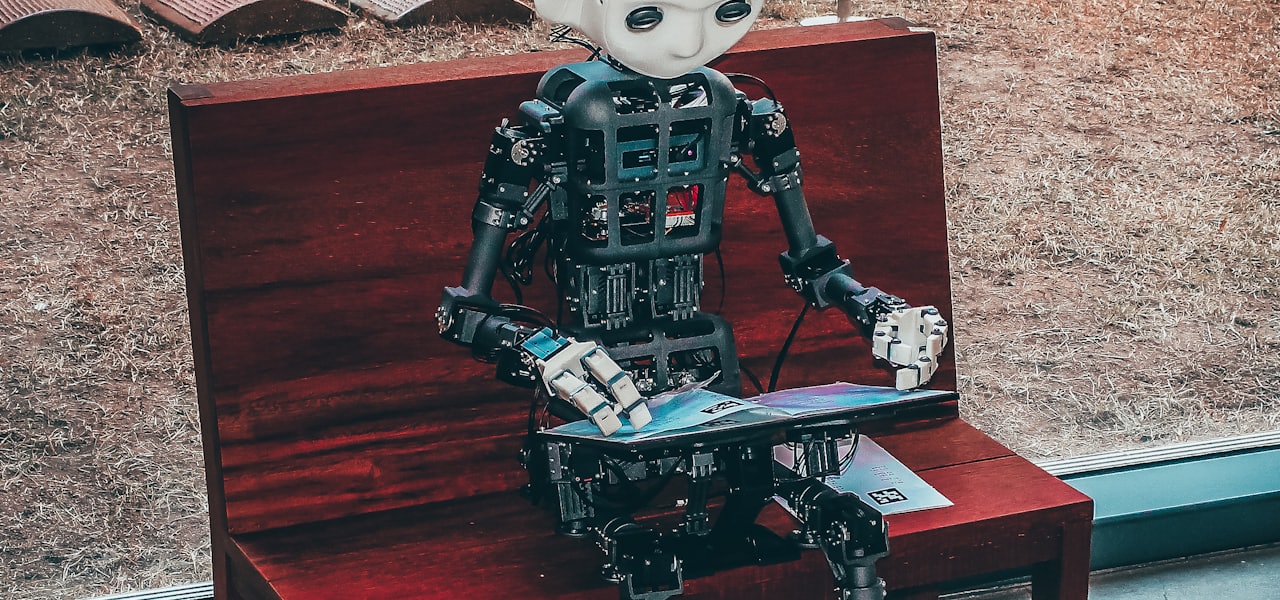
OpenWSN aims to build an open standard-based and open source implementation of a complete constrained network protocol stack for wireless sensor networks and Internet of Things. The project was created at the University of California Berkeley and extended at the INRIA and at the Open University of Catalonia (UOC). The root of OpenWSN is a deterministic MAC layer implementing the IEEE 802.15.4e TSCH based on the concept of Time Slotted Channel Hopping (TSCH). Above the MAC layer, the Low Power Lossy Network stack is based on IETF standards including the IETF 6TiSCH management and adaptation layer (a minimal configuration profile, 6top protocol and different scheduling functions). The stack is complemented by an implementation of 6LoWPAN, RPL in non-storing mode, UDP and CoAP, enabling access to devices running the stack from the native IPv6 through open standards. OpenWSN is related to other projects including the following: RIOT OpenMote OpenWSN is available for Linux, Windows and OS X platforms. Current release of OpenWSN is 1.14.0.
Gemini Enterprise Agent Platform
Gemini Enterprise Agent Platform (formerly known as Vertex AI) is a managed machine learning (ML) and artificial intelligence (AI) platform developed by Google Cloud. It provides a unified environment for building, training, deploying, and scaling ML models and generative AI applications. The platform integrates tools for the full ML lifecycle, including data preparation, model training, evaluation, deployment, and monitoring, under a single API and user interface. Vertex AI was announced at Google I/O and released as a generally available product on May 18, 2021. At launch, Google described Vertex AI as unifying its AutoML offerings with its prior Cloud AI Platform capabilities, and as adding operational features intended to help teams move models from experimentation into production use. On April 22, 2026, Google announced Gemini Enterprise Agent Platform as the replacement evolution of Vertex AI. == History == Google Cloud announced the general availability of Vertex AI on May 18, 2021, at the Google I/O developer conference. The platform was designed to consolidate Google Cloud's previously separate ML offerings, including AutoML and the legacy AI Platform, into a single system. At launch, Google claimed that Vertex AI required roughly 80% fewer lines of code to train a model compared to competing platforms. In June 2023, Google made generative AI support in Vertex AI generally available, giving developers access to foundation models including PaLM 2, Imagen, and Codey through the platform's Model Garden and the newly launched Generative AI Studio. At the time of this launch, Model Garden included over 60 models from Google and its partners. In August 2023, at the Google Cloud Next conference, Google announced further updates to Vertex AI, including the addition of third-party models such as Claude 2 from Anthropic and Llama 2 from Meta to the Model Garden, as well as new tools called Vertex AI Extensions for connecting models to APIs for real-time data retrieval. At the same event, Vertex AI Search and Conversation were made generally available, providing enterprise search and chatbot capabilities powered by foundation models. In April 2024, at Google Cloud Next, the company introduced Vertex AI Agent Builder, a no-code tool for creating AI-powered conversational agents built on top of Gemini large language models. This brought together the existing Vertex AI Search and Conversation products with new developer tools for building generative AI experiences. == Features == === Model training === Vertex AI supports both AutoML, which enables code-free model training on tabular, image, text, or video data, and custom training, which gives users full control over the ML framework, training code, and hyperparameter tuning. The platform provides serverless training as well as dedicated training clusters with GPU and TPU accelerators. Vertex AI Vizier handles automatic hyperparameter tuning, and Vertex AI Experiments allows comparison and tracking of training runs. === Model Garden === The Vertex AI Model Garden is a curated catalog of over 200 enterprise-ready models, including Google's own foundation models (such as Gemini, Imagen, and Veo), third-party models (such as Anthropic's Claude and Mistral AI models), and popular open-source models (such as Llama and Gemma). Models are accessible as fully managed model-as-a-service APIs. === Pipelines (workflow orchestration) === Vertex AI Pipelines provides managed orchestration of ML workflows and supports pipelines built with the Kubeflow Pipelines SDK, among other options described in Google Cloud documentation. === Vertex AI Studio === Vertex AI Studio provides tools for prompt design, testing, and model management, allowing developers to prototype and build generative AI applications using natural language, code, images, or video. === Agent Builder and Agent Engine === Vertex AI Agent Builder is a suite of products for building, deploying, and governing AI agents in production environments. It supports development with the open-source Agent Development Kit (ADK) and other frameworks. Vertex AI Agent Engine provides the underlying infrastructure for deploying and scaling agents, with support for enterprise security features including HIPAA compliance, customer-managed encryption keys (CMEK), and VPC Service Controls. === Generative AI tooling and model access === Google markets Vertex AI as providing access to Google foundation models (including the Gemini family) and developer tools such as Vertex AI Studio, along with a model catalog that includes Google and selected open source models (marketed as "Model Garden"). Google has also offered products within Vertex AI aimed at building generative search and conversational applications, including offerings named "Vertex AI Search" and "Vertex AI Conversation" as reported in 2023 coverage of platform updates. === MLOps tools === The platform includes a range of MLOps capabilities: Vertex AI Pipelines for orchestrating and automating ML workflows as reusable pipelines. Vertex AI Feature Store for serving, sharing, and reusing ML features across projects. Vertex AI Model Registry for storing, versioning, and managing trained models. Vertex AI Model Monitoring for detecting training-serving skew and inference drift in deployed models. Vertex Explainable AI for interpreting model predictions. Vertex AI Workbench for managed JupyterLab notebook environments integrated with Google Cloud Storage and BigQuery. == Industry recognition == Google was named a Leader for the fifth consecutive year in the 2024 Gartner Magic Quadrant for Cloud AI Developer Services, a recognition that encompasses Vertex AI and its related offerings. Google was also recognized as a Leader in the 2024 Gartner Magic Quadrant for Data Science and Machine Learning Platforms and was named a Leader in the Forrester Wave for AI/ML Platforms, Q3 2024. In October 2025, Google was also named a Leader in the 2025 IDC (International Data Corporation) MarketScape for Worldwide GenAI Life-Cycle Foundation Model Software. == Pricing == Vertex AI uses a pay-as-you-go pricing model, with costs determined by the specific services consumed, including model training, prediction serving, and data storage. For generative AI tasks, pricing is based on a per-token model, with rates varying depending on the specific model used and whether tokens are input or output. Google offers a free tier for new users, which includes limited custom training hours and online prediction usage, along with an introductory US$300 in Google Cloud credits valid for 90 days. == Adoption == In the year following its 2021 launch, Google reported that usage of Vertex AI and BigQuery had driven 2.5 times more machine learning predictions compared to the prior year, and that active customers of Vertex AI Workbench had grown 25-fold over a six-month period. Early enterprise adopters included Ford, Wayfair, and Seagate, among others. Wayfair reported that it was able to run large model training jobs 5 to 10 times faster using the platform.
Rumelhart Prize
The David E. Rumelhart Prize for Contributions to the Theoretical Foundations of Human Cognition was founded in 2001 in honor of the cognitive scientist David Rumelhart to introduce the equivalent of a Nobel Prize for cognitive science. It is awarded annually to "an individual or collaborative team making a significant contemporary contribution to the theoretical foundations of human cognition". The annual award is presented at the Cognitive Science Society meeting, where the recipient gives a lecture and receives a check for $100,000. At the conclusion of the ceremony, the next year's award winner is announced. The award is funded by the Robert J. Glushko and Pamela Samuelson Foundation. The Rumelhart Prize committee is independent of the Cognitive Science Society. However, the society provides a large and interested audience for the awards. == Selection Committee == As of 2022, the selection committee for the prize consisted of: Richard Cooper (chair) Dedre Gentner Robert J. Glushko Tania Lombrozo Steven T. Piantadosi Jesse Snedeker == Recipients ==
Anna Ridler
Anna Ridler (born 1985) is an artist who works with machine learning, handmade archives and moving image. She builds her own datasets to expose the labour and ideology embedded in the systems that organise knowledge. Her work is held in the permanent collections of the Whitney Museum of American Art, the Victoria and Albert Museum, M+ and ZKM Center for Art and Media Karlsruhe, and has been exhibited widely at cultural institutions including Tate Modern, Barbican Centre, Centre Pompidou, The Photographers' Gallery, Taipei Fine Arts Museum, MIT Museum, Kunsthaus Graz, ZKM Center for Art and Media Karlsruhe and Ars Electronica. == Biography == Born in London in 1985, Ridler spent her childhood raised between Atlanta, Georgia and the United Kingdom. She obtained a Bachelor of Arts in English Literature and Language from Oxford University in 2007 and a Master of Arts in Information Experience Design from the Royal College of Art in 2017. == Art practice == Ridler's practice uses technology, and in particular machine learning, to investigate how naming, classification and financial speculation determine what can be seen and what is erased. A core element of Ridler's work lies in the creation of handmade data sets through a laborious process of selecting and classifying images and text. By creating her own data sets, Ridler is able to uncover and expose underlying themes and concepts while also inverting the usual process of scraping pre-classified images found in large databases on the Internet. She began working with machine learning as an artistic material in 2017, at a moment when the technology required building every dataset by hand; that constraint became the foundation of the practice. Her interests are in drawing, machine learning, data collection, storytelling and technology. == Work == Some of Ridler's most notable works to date fall within her ‘tulip series’ which explores the hysteria around tulip mania and compares it to the speculation and bubbles surrounding cryptocurrencies. The series is expressed in three forms: a photographic dataset in Myriad (Tulips), 2018; two iterations of machine generated videos in Mosaic Virus (2018) and Mosaic Virus (2019); and a website with an accompanied functioning decentralized application in Bloemenveiling (2019). === Myriad (Tulips) (2018) === I wanted to draw together ideas around capitalism, value, and the tangible and intangible nature of speculation, and collapse from two very different yet surprisingly similar moments in history. Myriad (Tulips) (2018) is an installation of ten thousand hand-labeled photographs forming a dataset of unique tulips. The ten thousand, or myriad of, photographs were taken by Ridler over the course of three months, roughly the length of a tulip season, spent in Utrecht. Each photograph is carefully affixed one by one with magnets to a specially painted black wall in a laborious process to form a seemingly precise grid. Myriad (Tulips) (2018) has been exhibited in AI: More than Human, Barbican Centre, London, UK (May 16 - August 26, 2019); Error—The Art of Imperfection, Ars Electronica Export, Berlin, Germany (November 17, 2018 – March 3, 2019); Peer to Peer, Shanghai Centre of Photography, Shanghai, China (December 8 - February 9, 2020). The work was featured in Bloomberg, It’s Nice That, and Hyperallergic. For Myriad (Tulips), Ridler was nominated for a Beazley Design of the Year award for her presentation of an alternative perspective on how to engage with artificial intelligence; demonstrating a departure from ownership and control of major corporations to a more personalized process of constructing and conceptualizing from the ground-up. === Mosaic Virus (2018, 2019) === Mosaic Virus (2018) is a single screen video installation displaying a grid of continually evolving tulips in bloom. For Mosaic Virus (2019) Ridler used three screens. The appearance of the tulips is controlled by artificial intelligence using fluctuations in the price of bitcoin. The stripes on the tulips' petals reflect the value of the cryptocurrency. Ridler draws parallels with the tulip mania of the 17th century; representing the hysteria and speculation around crypto-currencies. The work takes its name from the mosaic virus which caused stripes in tulip petals, subsequently increasing their desirability and leading to speculative prices. Ridler trained a general adversarial network (GAN) on the set of ten thousand photographs of individual tulips from her work Myriad (Tulips). She used a technique called spectral normalization to improve the output. The work was exhibited in Error—The Art of Imperfection, Ars Electronica Export, Berlin, Germany (November 17, 2018 – March 3, 2019). === Bloemenveiling (2019) === Bloemenveiling (2019) is an auction of artificial-intelligence-generated tulips on the blockchain in the form of a functioning decentralized application: http://bloemenveiling.bid. Ridler collaborated with senior research scientist at DeepMind, David Pfau to investigate whether blockchain could be used as a means of finding poetic substance within it. The piece interrogates the way technology drives human desire and economic dynamics by creating artificial scarcity. In the work, short moving image pieces of tulips created by generative adversarial networks are sold at auction using smart contracts on the Ethereum network. Each time a tulip is sold, thousands of computers around the world all work to verify the transaction, checking each other's work against each other. While the artificial intelligence behind the moving image pieces has the potential to generate infinite flowers, the enormous distributed network is used, at great environmental cost, to introduce scarcity to an otherwise limitless resource. Bloemenveiling was exhibited in Entangled Realities, HEK Basel, Basel, Switzerland in 2019. == Solo exhibitions == Anna Ridler, Circadian Bloom, ZKM Center for Art and Media, Karlsruhe, (2023) Anna Ridler, Time Blooms, Buk Seoul Museum of Art, Seoul, (2025) Anna Ridler, Trace Remains, Galerie Nagel Draxler, Cologne, (2026) Anna Ridler, Laws of Ordered Form, The Photographers' Gallery, London (2020); The Abstraction of Nature, Aksioma, Ljubljana (2020) == Awards and recognition == European Union EMAP Fellow (2018) DARE Art Prize (2018–2019) Featured in Thames & Hudson, Digital Art (1960s–Now) Featured in British Art: The Last 15 Years ABS Digital Artist of the Year (2025)
Federation of International Robot-soccer Association
The Federation of International Robot-soccer Association (FIRA) is an international organisation organising competitive soccer competitions between autonomous robots. The matches are usually five-a-side. == History == In 1996 and 1997, this competition was known as MiroSot and was held in Daejeon, Korea. The 1996 competition offered a challenging arena to the younger generation and researchers working with autonomous mobile robotic systems. From 1998 through 2008, it was called the FIRA Cup, and in 2009, it became the FIRA RoboWorld Cup & Congress. The 15th RoboWorld Cup was held at Amrita Vishwa Vidyapeetham, Bangalore, India in September 2010. In 2013, it took place in Kuala Lumpur, Malaysia. The championship started on August 24, 2013, and ended on August 29. At that time, it involved five categories: Micro-Robot Soccer Tournament, Amire, Naro, Simulated Robot, Android, Robo and Humanoid Robot. It attracted teams from Singapore, Indonesia, Taiwan, India, China, South Korea, the United Kingdom, Mexico, Canada, Russia and Malaysia. 80 teams from 11 countries participated. In 2018, the competition had 277 teams participating from 12 countries. === Past Events === == FIRA RoboWorld Cup & Congress == This competition has 4 leagues: FIRA AIR, FIRA Sports, FIRA Challenges, and FIRA Youth. Each league has its own competitions, and each competition can have several events. === FIRA AIR === The FIRA AIR league has two associated competitions, Autonomous Race and Emergency Service. === FIRA Sports === The FIRA Sports league has four associated competitions, HuroCup, RoboSot, SimuroSot, and AndroSot. This the robot soccer league. HuroCup consists of single events for bipedal humanoid robots. The events are: archery, sprint, marathon, united soccer, obstacle run, long jump, spartan race, marathon, weightlifting, and basketball. There is an all-round competition for the single robot that performs the best overall. === FIRA Challenges === The FIRA Challenges league has three associated competitions, Autonomous Cars, Autonomous Cars Simulation, Innovation and Business. === FIRA Youth === The FIRA Youth league has six associated challenges, Sport Robots, HuroCup Junior, CityRacer, DRV_Explorer, Cliff Hanger, and Mission Impossible.
IPUMS
IPUMS, originally the Integrated Public Use Microdata Series, is the world's largest individual-level population database. IPUMS consists of microdata samples from United States (IPUMS-USA) and international (IPUMS-International) census records, as well as data from U.S. and international surveys. The records are converted into a consistent format and made available to researchers through a web-based data dissemination and analysis system. IPUMS is housed at the Institute for Social Research and Data Innovation (ISRDI), an interdisciplinary research center at the University of Minnesota, under the direction of Professor Steven Ruggles. == Description == IPUMS includes all persons enumerated in the United States censuses from 1850 to 1950 (though, the 1890 census is missing because it was destroyed in a fire) and from the American Community Survey since 2000 and the Current Population Survey since 1962. IPUMS includes household-level data for United States Censuses from 1790 to 1840, due to the first six censuses only including the name of the head of household, with tallied household totals following. IPUMS provides consistent variable names, coding schemes, and documentation across all the samples, facilitating the analysis of long-term change. IPUMS-International includes countries from Africa, Asia, Europe, and Latin America for 1960 forward. The database currently includes more than a billion individuals enumerated in 365 censuses from 94 countries around the world. IPUMS-International converts census microdata for multiple countries into a consistent format, allowing for comparisons across countries and time periods. Special efforts are made to simplify use of the data while losing no meaningful information. Comprehensive documentation is provided in a coherent form to facilitate comparative analyses of social and economic change. Additional databases in the IPUMS family include the: North Atlantic Population Project (NAPP) IPUMS National Historical Geographic Information System (NHGIS) IPUMS Health Surveys IPUMS Global Health IPUMS Time Use The Journal of American History described the effort as "One of the great archival projects of the past two decades." Liens Socio, the French portal for the social sciences, gave IPUMS the only “best site” designation that has gone to any non-French website, writing “IPUMS est un projet absolument extraordinaire...époustouflante [mind-blowing]!” The official motto of IPUMS is "use it for good, never for evil." All public IPUMS data and documentation are available online free of charge.
SciGraph
SciGraph was a search engine tool developed by Springer Nature, the former URL was https://scigraph.springernature.com/explorer. The technology, which was considered a Linked Open Data (LOD) platform, collects information that covers the research landscape, which includes research projects, publications, conferences, funding agencies, and others. Key features of the platform include the detailed semantic description of the relationship of information and the visualization of the scholarly domain. It was launched in 2017 and retired in 2023. == Development == The development of SciGraph began with an initiative to create a platform that will host Springer Nature's entire publication archive, which cover texts published as early as 1815. The number of these resources is reported to be about 13 million. The technology behind the platform was built on earlier Springer Nature projects developed for the purpose of collecting information on the research landscape. The first SciGraph data set was published in February 2017. The platform was launched in March 2017 and significantly expanded with the addition of publications of key partners. The datasets span a broad range of topics, which include computer science, medicine, life sciences, chemistry, engineering, and astronomy, among others. The developers also plan to include citations, patents, and clinical trials in the future. == Technology == SciGraph constitutes 1.5 to 2 billion triples where a triple is formatted as "subject-predicate-object" and could link any subject or concept through a predicate (verb) to another object, demonstrating the type of relationship that exists between them. Its graph structure is used by other academic search engines such as Semantic Scholar. SciGraph collects data from Springer Nature and its partners from the scholarly domain as well as funders, research projects, conferences, affiliations, and publications. The collected information serves as rich semantic description of how information is related and it also provides a visualization of the scholarly domain. The platform has been considered the only large-scale dataset that reconciles authors' affiliations through the disambiguation and linking with external authoritative datasets according to institutions.